
Universal Orlando’s new packing guidance quietly reshapes how to plan a 2026 trip
Universal Orlando has released updated packing guidance for 2026, and it reads like more than a reminder list. For first-timers, families, and multi-day visitors moving between parks, hotels, and water activities, the advice has real implications for comfort, timing, and avoidable costs.
Universal Orlando has published updated packing advice for resort vacations, and the timing matters. On the surface, it looks like a simple checklist of sunscreen, chargers, and comfortable shoes. In practice, it reflects the way a modern Universal Orlando trip actually works: multiple park types, long outdoor days, sudden Florida weather changes, hotel downtime, and evenings that may extend beyond the parks.
That matters even more in 2026 because visitors are increasingly building flexible trips rather than single-park days. The guidance specifically points travelers toward practical readiness for heat, rain, water rides, and on-site hotel benefits. It also references 3-, 4-, and 5-day Park-to-Park tickets available for visits beginning January 1, 2026, with the freedom to move among all four theme parks, which changes what many guests should carry each day.
For travelers, especially those trying to balance value and efficiency, this is useful news. Packing decisions affect locker use, replacement purchases, midday hotel returns, and how much physical effort each day requires. The update is most helpful when read not as a generic vacation list, but as an operations guide for different traveler types: families with kids, couples mixing parks and nightlife, and guests staying on-site to maximize included perks.
This is no longer a one-bag theme park vacation
The clearest message in the new guidance is that a Universal Orlando trip now needs to be packed in layers of purpose. Guests are advised to think beyond daytime park clothes and include swimwear for water time, slightly nicer evening options, light outerwear for aggressive indoor air-conditioning, and sun protection that can hold up through repeated outdoor exposure. That tells us the resort expects many guests to build blended itineraries rather than simple park-open-to-park-close routines.
There is a budget angle here too. Travelers who fail to plan for those shifts often end up making expensive small purchases on property: emergency ponchos, replacement sandals, extra sunscreen, dry shirts, or an additional tote after souvenir space runs out. A better approach is to organize the suitcase by activity category instead of day count.
Florida weather turns ordinary packing choices into strategy
The recommended core items make perfect sense for Orlando conditions: sunscreen, hats, sunglasses, lightweight clothing, reusable water bottles, and some kind of rain protection. That is more than standard summer advice. In Central Florida, heat and humidity can wear people down quickly, and the afternoon shower pattern means guests may face bright sun, a brief downpour, and warm pavement all in the same day. Packing for that rhythm can directly improve stamina and decision-making in the parks.
One especially practical point is the push toward smaller bags or waist packs. Large backpacks can become tiring, and some attractions require lockers, which adds friction throughout the day. Guests who carry only what they truly need usually move more smoothly between rides, shows, meals, and park hops. The guidance also highlights essential medications and the availability of health services support if storage help is needed, which is an important reassurance for families, seniors, and anyone traveling with medical routines.
A compact bag can save both energy and time by reducing unnecessary locker stops.
A reusable bottle is one of the simplest ways to control both heat fatigue and impulse drink spending.
Light rain gear and waterproof pouches can prevent avoidable mid-afternoon disruptions after storms or water rides.
Park-to-Park flexibility changes what belongs in your daily kit
The mention of multi-day Park-to-Park tickets for visits starting January 1, 2026 is one of the most useful details in the update. If guests can move freely among four theme parks across several days, they should stop thinking in terms of one fixed park bag per morning. A repeatable daily kit becomes much smarter: room key, ID, phone power, water, snacks, sunscreen, and one weather backup item.
This also affects hotel routines. Instead of constantly returning to the room for forgotten basics, guests can create a simple base station with separate categories for dry parks, water park gear, hotel pool needs, and evening plans. That saves time and cuts down on daily stress, especially for families. For on-site hotel guests, keeping the room key accessible matters even more because it may be needed for Early Park Admission and, at select hotels, benefits tied to Universal Express eligibility.
Volcano Bay, resort hotels, and young kids need their own packing logic
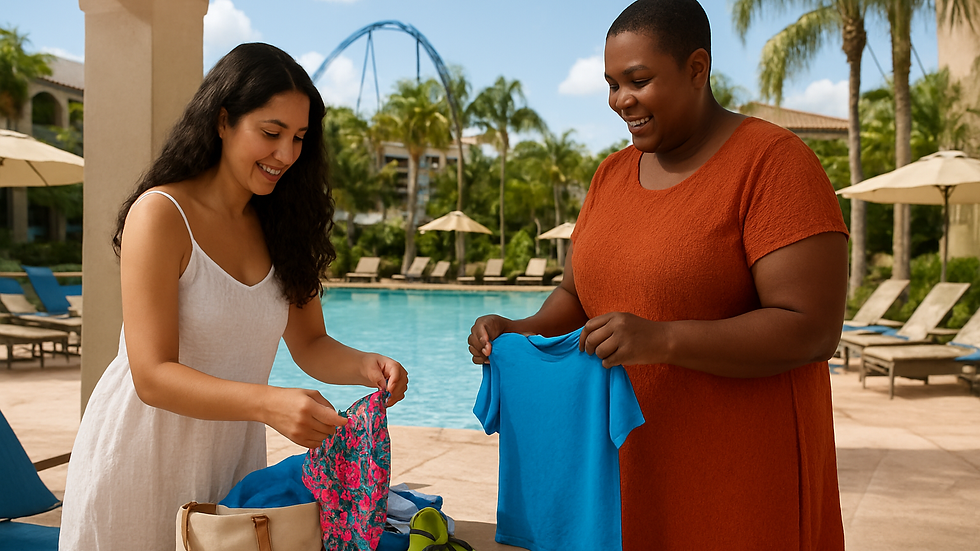
One of the strongest parts of the guidance is its clear separation between standard theme park needs and Volcano Bay needs. For the water park, the recommended setup includes a personal towel, water shoes, beach bag, swimwear, a change of clothes, and a bag for wet items. It also notes that guests do not need to bring their own tubes, while a soft cooler for water and snacks may be helpful.
The hotel portion of the advice is also more relevant than it may seem. On-site stays can involve pool time, dining, bars, and celebration moments in addition to park touring, so guests benefit from packing with those transitions in mind. Families with babies or toddlers get especially actionable guidance: compact stroller, stronger sun planning, and a light layer or blanket for heavily air-conditioned interiors.
Pack a dedicated Volcano Bay bag the night before instead of rebuilding it in the morning.
Families with small children should prioritize mobility, spare clothes, and light layers for indoor temperature swings.
Separating pool gear from evening wear in the hotel room reduces clutter when everyone returns tired.
Useful advice, but still something travelers should personalize
The update also includes optional extras that many guests will appreciate, such as portable chargers, camera memory cards, queue entertainment, and themed clothing for fun photo moments. It reminds travelers to review what is allowed and prohibited before entering the parks, which can prevent frustrating security delays. At the same time, not every suggestion should be treated as mandatory.
The smartest reading of the guidance is not to bring more, but to bring more intentionally. Snacks can help, but overloading a backpack has its own physical cost. Specialty drink cups or extra gear only save money if they match how a group actually tours. The best outcome comes from matching the list to trip style, season, and traveler profile.
Universal Orlando’s updated packing guidance matters because it translates the realities of a 2026 trip into everyday decisions travelers can act on before they leave home. Heat, rain, hotel benefits, water activities, and park-hopping all show up in the suitcase long before they show up in the itinerary.
For first-time visitors, families, and guests trying to get the most from several days on-site, the difference between a smooth trip and a draining one often comes down to small operational choices: bag size, spare clothes, phone power, room key access, and realistic preparation for Florida weather.
If you’re narrowing down travel dates, hotel strategy, or how to pack for your group’s pace and priorities, TodoOrlando can keep that conversation going in a way that turns a good-looking plan into a trip that actually works once you arrive.
todorlando team
📲 Message us on WhatsApp and we will quote your Orlando 2026 trip for FREE. No pressure, no commitment.
Hours, attractions, tickets, promotions and events are subject to change by Disney, Universal Orlando, Disney Cruise Line and other providers. Always confirm official details before booking.



Comments